London brought together some of the most consequential voices in energy and heavy industry last week, as the Go Digital Energy Summit opened its doors to senior leaders navigating one of the defining challenges of the decade: how to implement artificial intelligence at enterprise scale, responsibly, and without losing control.
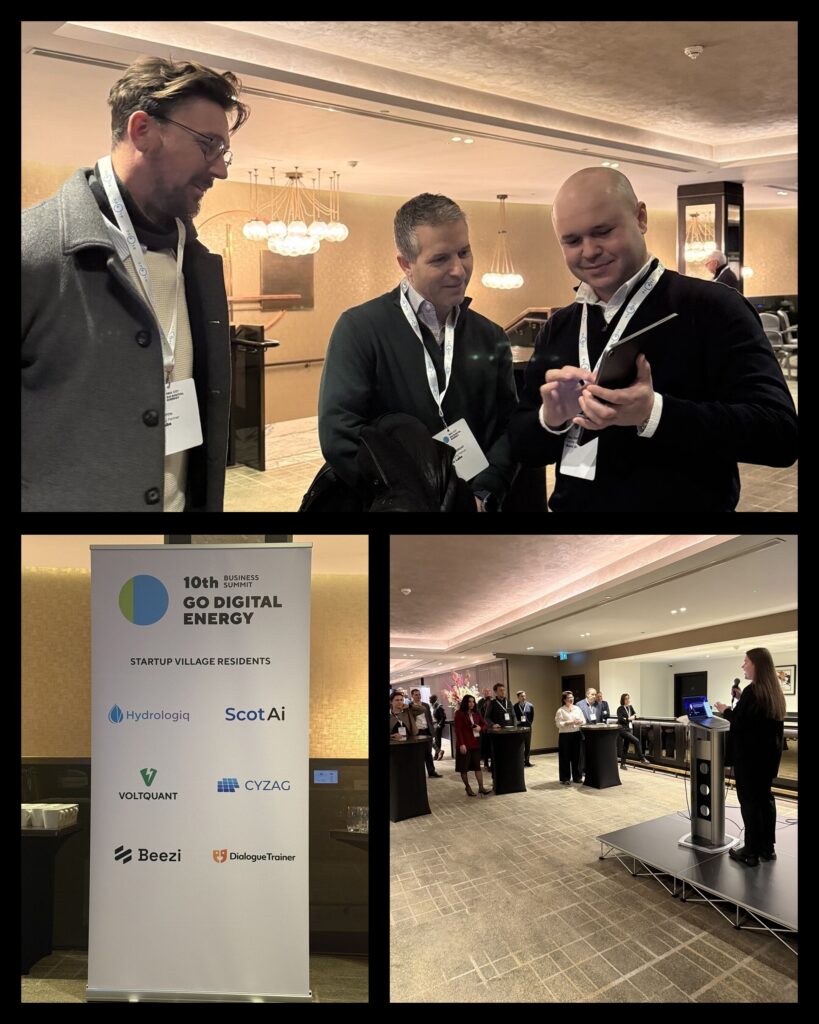
Honeycomb Software was there. Our CEO, Alex Semeniuk, and VP of Partnerships, Tetiana Krechyk, spent two days in focused conversation with decision-makers from across the energy sector, exchanging perspectives, presenting our approach, and listening carefully to where the industry actually stands.
A room full of decision-makers, not experimenters
What set the Go Digital Energy Summit apart was its audience. The room was filled with people for whom AI is no longer a future topic — it's a present-day responsibility. Top executives, senior leaders, and innovation teams, all accountable for making AI work inside large, complex organizations right now.
That distinction mattered. The conversations were direct, structured, and grounded in operational reality. As Tetiana noted, the event had strong representation from energy companies and a clear enterprise focus throughout.
The execution gap is real
Organizations are no longer debating whether to adopt AI. They are preparing to implement it, and finding the path is now harder than anticipated.
Data readiness kept coming up as a foundational challenge. Before AI can deliver value, the underlying data infrastructure has to be trustworthy, accessible, and well-governed. However, for many large energy companies, that work is still underway.
Integrating AI into legacy systems adds another layer of complexity, requiring careful engineering rather than quick deployment. But the most striking theme wasn't technical at all. Regulation, compliance, and change management are frequently what slow things down.
Companies aren't stuck on the technology. They're navigating governance frameworks, organizational resistance, and the very real challenge of bringing large teams along on a transformation journey.
As Alex put it after the summit, AI adoption in enterprise energy is serious and structured, and it is moving forward, but the execution challenges are real and complex.
Technology Showcase: Security-first AI orchestration
During the event's Technology Showcase, Tetiana presented Honeycomb Software's approach to AI implementation, positioning us as a security-first hub for orchestrating AI development across enterprise environments.
The presentation addressed AI governance, security architecture, and the structured implementation frameworks that large organizations need to scale. The audience response was clear: security and change management concerns resonated immediately. These aren't abstract worries — they are the live challenges that executives in the room are responsible for solving.
That alignment confirmed something we've believed for a while. Enterprises don't just need AI capability. They need a partner who understands the weight of governance and the complexity of organizational change, and who builds accordingly.
From hype to operational phase
Perhaps the most important signal from the Go Digital Energy Summit was this shift in posture: AI has moved from a topic of curiosity to a matter of operational planning. Leaders are asking how to implement AI without creating new risks, how to maintain oversight as systems scale, and how to manage the human side of the transition.
Looking ahead
The Go Digital Energy Summit reflected something broader happening across the energy sector right now. The conversation has matured: AI is no longer being evaluated, it's being operationalized.
The organizations moving forward with confidence are those that treat governance, security, and change management as core requirements from the start, not afterthoughts. For Honeycomb Software, that's not a new message — it's what we've been building toward, and events like this one confirm that the industry is arriving at the same conclusions.